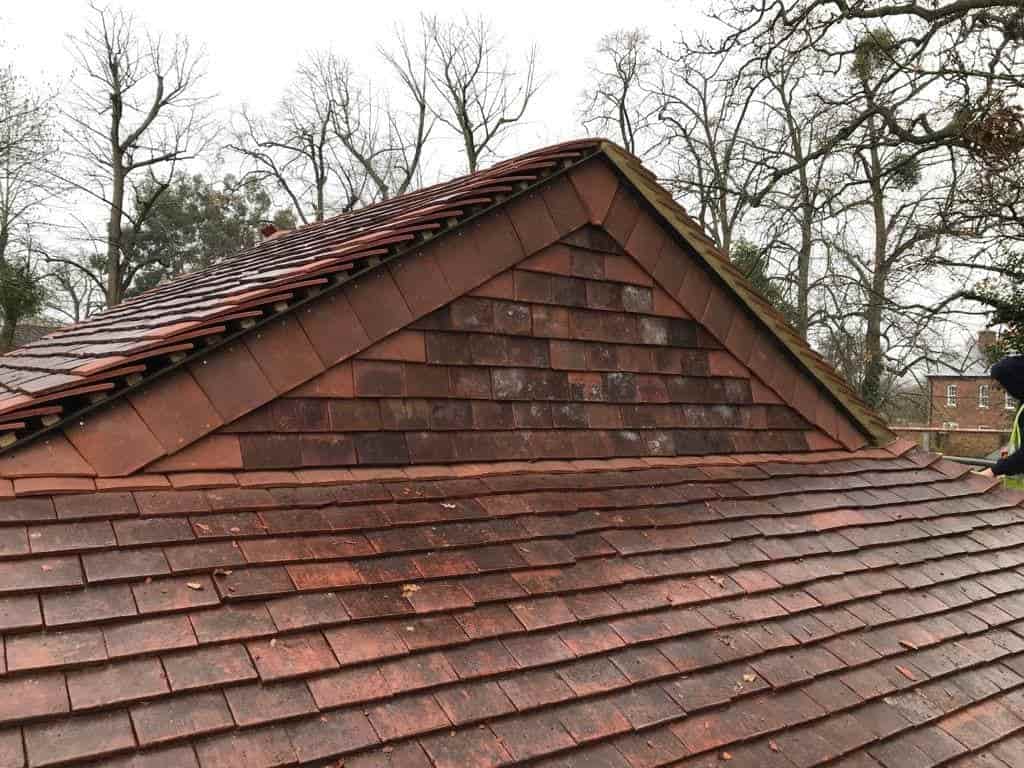
Re-roofing is much more than removing an ageing roof covering and replacing it with new tiles or slates. Before new roofing materials are installed, it is important to understand the condition of the existing roof and identify why replacement has become necessary in the first place.
Visible deterioration may only tell part of the story. Damaged tiles, recurring leaks or deteriorated roof details can sometimes be accompanied by problems beneath the covering, including worn underlay, unsuitable battens or localised deterioration that cannot be fully assessed from the outside.
For property owners in Whitstable, Kent, a thorough assessment before re-roofing helps establish the correct scope of work. It allows serviceable elements to be distinguished from those requiring attention and provides a more reliable starting point for the new roof.
What Should Be Assessed Before an Existing Roof Is Re-Roofed?
A professional roof assessment should consider both the visible covering and the components that support its performance. Tiles or slates are important, but they form only the outer layer of a wider roofing system.
The condition of underlay, battens, roof junctions, flashing, valleys, ridges, hips and other details can influence how re-roofing should be approached. Once the existing covering is removed, previously concealed areas can also be examined more closely.
Understanding these conditions prevents the new roof from being planned purely around what could be seen before work began.
The Reason for Re-Roofing Should Be Understood
Before renewing a roof, it is useful to establish why the existing one is no longer performing adequately.
Some roofs develop widespread material deterioration. Others experience recurring leaks in different locations, extensive slipping of tiles or repeated problems around important junctions.
Identifying the pattern of deterioration helps determine what needs to be addressed during the re-roofing process.
Visible Roof Damage May Not Show the Complete Picture
The exterior can provide valuable clues about a roof’s condition, but it does not reveal everything beneath the surface.
A roof may contain cracked or displaced tiles while the underlying components remain suitable. Alternatively, relatively modest external deterioration can sometimes conceal more widespread problems underneath.
This is why assessment should continue as the existing roof is stripped.
Re-Roofing Provides Access to Previously Hidden Areas
One of the important differences between local roof repair and re-roofing is the level of access available.
During an isolated repair, only a limited area may need to be opened. Re-roofing removes the existing covering much more extensively, making it possible to inspect areas that have been concealed for years.
This information can help ensure appropriate preparation takes place before the new covering is installed.
The Condition of the Roof Covering Matters
Existing tiles or slates can provide useful information about how the roof has deteriorated.
Widespread cracking, movement, slipping or surface deterioration can indicate that problems are no longer concentrated within one repairable section. The distribution of defects is particularly important.
A roof with one damaged area presents a very different situation from one showing similar deterioration across multiple slopes.
Previous Repairs Can Reveal a Pattern
Many established roofs contain evidence of earlier repairs.
This is not automatically a problem. Occasional maintenance is a normal part of looking after a roof, and well-executed repairs can remain effective for many years.
However, numerous repair areas across different sections can indicate that deterioration has gradually become more widespread.
Recurring Leaks Need Proper Investigation
A history of water ingress is particularly relevant before re-roofing.
If leaks have repeatedly appeared in different locations, simply replacing the visible covering without considering their causes would provide an incomplete assessment. Water may have entered through tiles, flashing, valleys or other roof details.
Understanding these weaknesses helps ensure the replacement work addresses the roofing system comprehensively.
Water Can Travel Away From the Original Defect
The location of an internal damp mark does not always correspond directly with the point where water entered.
Moisture can travel along underlay or other components before becoming visible. This can make an apparently straightforward leak more difficult to diagnose.
Examining the roof as it is opened can provide useful information about previous water paths and affected areas.
Underlay Is an Important Part of the Roofing System
Beneath tiles or slates is an underlay or membrane that provides an additional layer within the roof construction.
Older underlay can deteriorate over time. It may become brittle, damaged or less effective in particular areas, especially where it has previously been exposed to moisture.
Re-roofing provides the opportunity to assess and renew this layer as part of the wider installation where required.
Battens Need to Provide Suitable Support
Roofing battens support the tiles or slates and provide fixing points for the roof covering.
Their condition cannot always be established fully until the existing materials are removed. Where sections have deteriorated or are unsuitable for the new roofing system, appropriate attention is required before installation continues.
A new covering needs an appropriately prepared supporting system beneath it.
Roof Timbers Should Not Simply Be Assumed Sound
The visible covering and the main roof structure are different parts of the building.
Where there has been persistent water ingress, accessible structural timbers may need to be checked for signs of deterioration. Re-roofing should not proceed on the assumption that everything beneath the existing covering is automatically suitable.
Condition-led assessment helps determine what genuinely requires attention.
New Tiles Cannot Correct an Unsuitable Base
A new roof covering can only perform as part of the system supporting it.
If underlying components are unsuitable, simply placing new materials over them does not address the cause. Preparation is therefore one of the most important stages of re-roofing.
The work beneath the finished surface may be less visible, but it is fundamental to the overall installation.
Roof Levels and Alignment Can Reveal Useful Information
The general appearance of an existing roof can sometimes indicate areas requiring closer examination.
Noticeable unevenness or localised changes in the roof plane may have several possible causes. These should be understood rather than automatically concealed beneath a replacement covering.
A professional assessment can determine whether the issue relates to the covering or something beneath it.
Valleys Require Careful Examination
Roof valleys carry concentrated rainwater between adjoining roof slopes.
Because of their function, deterioration in these areas can become a significant source of water ingress. Previous repairs, surrounding materials and the condition of the valley itself should therefore be considered during re-roofing.
Renewing the roof provides an opportunity to incorporate appropriate valley detailing into the new installation.
Ridge Details Form Part of the Overall Assessment
Ridge areas are exposed parts of many roofs and can deteriorate independently from the main covering.
Existing ridge materials, fixings and surrounding tiles can provide information about the roof’s maintenance history and general condition.
During re-roofing, ridge details can be approached as part of the complete new roof rather than as an isolated repair.
Hip Details Also Need Attention
On roofs containing hips, these areas form important junctions between adjoining slopes.
Ageing materials or previous repairs may have affected their condition. Their relationship with the surrounding roof covering should therefore be considered as part of the re-roofing process.
A coordinated approach helps ensure important details are not treated separately from the main installation.
Flashing Should Be Assessed Before and During Re-Roofing
Flashing protects vulnerable roof junctions and interfaces.
Existing flashing may have been repaired several times or may show deterioration alongside the roof covering. Its condition should be considered when planning the replacement roof.
Relevant flashing details can then be incorporated appropriately into the wider work.
Chimney Junctions Can Be Vulnerable Areas
Where a roof meets a chimney, careful detailing is required to manage water.
Signs of historic leaks or previous patching around these areas deserve attention before and during re-roofing. The problem should not automatically be assumed to originate from the surrounding tiles.
Understanding the junction allows the new roofing work to respond to the actual condition present.
Roof Edges Should Be Included in the Inspection
Eaves, verges and other roof edges form important transitions within the roofing system.
These areas can experience weather exposure and may contain evidence of previous deterioration. Their condition should be considered alongside the central roof slopes.
A complete re-roofing assessment should not focus only on the largest visible surfaces.
Repeatedly Slipping Tiles Can Indicate More Than One Problem
One slipped tile may be a straightforward isolated defect.
When tiles repeatedly move across several parts of the roof, however, it is worth considering the condition of the fixings, battens and wider covering.
Re-roofing allows these supporting elements to be assessed rather than repeatedly treating each slipped tile as a separate event.
Widespread Tile Damage Helps Define the Scope of Work
The distribution of damaged roofing materials can provide useful information.
If deterioration is limited to one section, extensive replacement may not always be necessary. If similar defects are present throughout the roof, the case for comprehensive renewal becomes stronger.
This distinction should be established through condition rather than assumption.
Old Patch Repairs Should Be Examined
A roof may accumulate many different repair materials over its lifetime.
Some patches may remain entirely serviceable, while others can indicate areas that have experienced repeated problems. When the covering is removed, these locations can be examined more closely.
This can reveal whether previous repairs addressed isolated faults or whether a wider issue had been developing.
The Roof’s Age Is Only Part of the Decision
Age alone does not provide a complete assessment of condition.
Two roofs of similar age can perform very differently depending on their materials, previous maintenance and exposure. One may remain suitable for further repair, while another has developed widespread deterioration.
Physical condition should therefore carry greater weight than age by itself.
Re-Roofing Should Not Be Recommended Simply Because a Roof Is Old
An established roof does not automatically require complete renewal.
If the covering and associated components remain serviceable, targeted repairs may continue to be appropriate. Re-roofing becomes more relevant where deterioration is widespread or several important parts of the system are becoming unreliable.
Professional assessment helps avoid unnecessary replacement.
The Existing Roof Helps Determine the Preparation Required
Not every re-roofing project starts from the same condition.
Some roofs may require relatively straightforward preparation once the existing covering has been removed. Others can reveal areas needing additional attention before the new installation proceeds.
Allowing the condition found to guide the preparation produces a more appropriate result than applying exactly the same process to every roof.
Preparation Should Continue as the Roof Is Opened
Preliminary inspection is important, but some information only becomes available during the work.
Once tiles or slates are removed, previously hidden components become visible. Any deterioration discovered at this stage should be assessed before being covered by the new roof.
This staged assessment is an important part of responsible re-roofing.
Existing Problems Should Not Simply Be Covered Over
One of the most important principles of re-roofing is that new materials should not be used to hide unresolved deterioration.
If an underlying defect is discovered, its cause and extent should be considered before the new covering proceeds over that area.
The objective is to create a properly prepared roofing system rather than merely improve the external appearance.
Re-Roofing Is More Than Replacing Tiles
Homeowners often naturally focus on the new tiles or slates because these form the visible finished surface.
However, a professionally completed re-roofing project involves considerably more. Preparation, supporting components, roof details and the condition of what lies beneath all influence the finished installation.
The visible roof is the final stage of a much broader process.
Understanding the Existing Roof Can Help Prevent Recurring Problems
If the old roof experienced repeated problems, identifying their causes provides valuable information for the replacement.
For example, a history of water ingress around a particular junction deserves specific attention when the new roofing system is planned.
Re-roofing should provide an opportunity to address recurring weaknesses rather than simply recreate the previous arrangement without assessment.
Not Every Existing Component Necessarily Needs Replacement
Condition-led work also means avoiding unnecessary intervention.
Where components remain suitable and compatible with the proposed work, assessment can identify that fact. Re-roofing should not be based on automatically replacing everything regardless of condition.
The appropriate scope should reflect what is actually found.
Professional Assessment Helps Define the Re-Roofing Specification
A reliable re-roofing project begins with understanding what is already present.
The roof’s shape, existing covering, supporting construction, vulnerable details and history of deterioration all contribute to the specification of the new work.
This prevents decisions being based solely on the appearance of the replacement materials.
Why Professional Re-Roofing Adds Value
Re-roofing requires careful decisions before and during the removal of the existing covering. Understanding what has deteriorated, what remains serviceable and whether hidden problems are present helps ensure the new roof is installed over appropriately prepared components.
At Whitstable Roofers, we assess the existing roofing system and relevant details before determining the appropriate approach to re-roofing. As the roof is opened, previously concealed areas can also be considered so that the work responds to the actual condition found.
For properties in Whitstable, Kent, this condition-led approach helps ensure that re-roofing addresses more than the visible symptoms of an ageing or deteriorating roof.
A New Roof Should Start With a Reliable Foundation
The appearance of new tiles or slates is important, but it should never distract from what supports them.
A properly planned re-roofing project considers the complete build-up beneath the finished surface. Suitable preparation gives the new covering an appropriate foundation and ensures important roof details can be incorporated coherently.
This is why inspecting the existing roof is such an important part of the process.
Conclusion
The condition of an existing roof is important before re-roofing because it determines what preparation and associated work may be required beneath the new covering. Visible tile or slate deterioration may only represent part of the problem, while underlay, battens, flashing, valleys, junctions and accessible supporting components may also require assessment.
Re-roofing provides an opportunity to inspect areas that have remained concealed and to understand the causes of recurring problems before new materials are installed. At the same time, a condition-based assessment can help avoid unnecessary work where existing elements remain suitable.
If your property in Whitstable, Kent, is reaching the stage where re-roofing is being considered, contact Whitstable Roofers. We can assess the existing roof, identify the areas requiring attention and recommend an appropriate approach based on the condition of the complete roofing system.
Call us on: 01227 203788
Click here to find out more about Whitstable Roofers
Click here to complete our contact form and see how we can help with your roofing needs.